
Types of Dental Implants: Which Option May Be Suitable for You?

Updated: Jul 13

Missing teeth can affect both oral function and confidence. Many adults looking for a long-term replacement option often consider dental implants because they are designed to restore chewing ability, support facial structure, and replace missing teeth more securely than some removable alternatives.
However, not all implants are the same. There are several types of dental implants available, and each option is designed for different oral health conditions, bone structures, and treatment goals.
Patients exploring dental implants should understand the differences between implant types before starting treatment. At EZ Dental Care, patients visiting our Bedok North dental clinic and Geylang Bahru dental clinic can undergo a detailed consultation to determine which implant solution may be appropriate for their needs.
What Are Dental Implants?
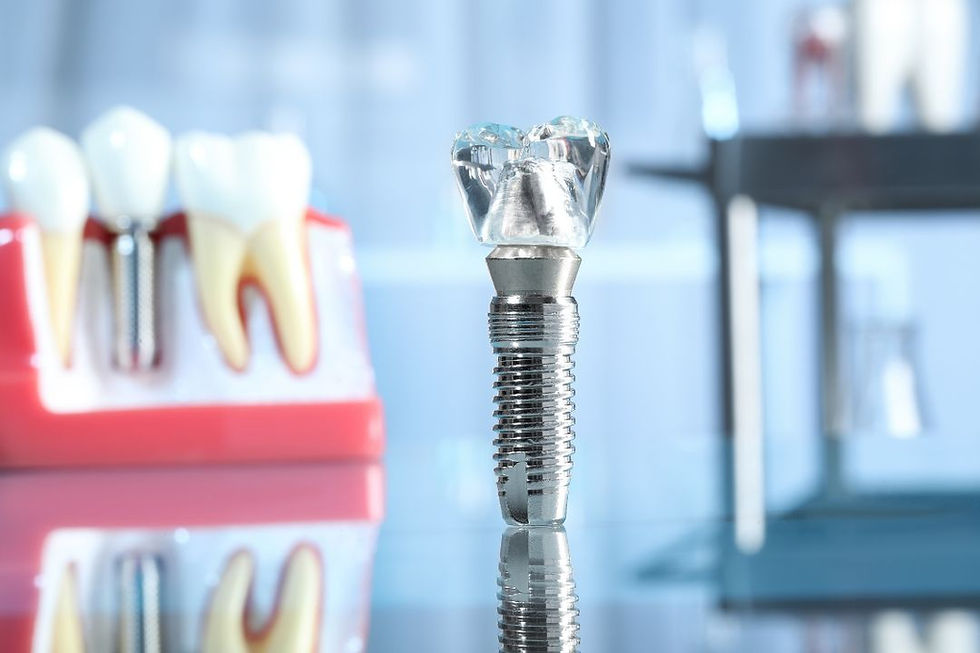
Dental implants are artificial tooth roots placed into or around the jawbone to support replacement teeth. They are commonly made from titanium because the material can bond with bone over time through a process called osseointegration.
Dental implants may support:
Single crowns
Dental bridges
Full or partial dentures
The type of implant recommended depends on several factors, including:
Bone density
Number of missing teeth
Oral health condition
Functional needs
Aesthetic goals
Patients who want to better understand the treatment stages involved can check this guide about dental implants procedure before deciding on treatment.
Root-Form (Endosteal) Implants
Root-form implants, also called endosteal implants, are the most commonly used dental implants today.
These implants are surgically inserted directly into the jawbone and act as artificial tooth roots. Once healing is complete, they support crowns, bridges, or dentures.
This type of implant is frequently recommended because of its long history of clinical use and strong integration with bone.
Advantages of Root-Form Implants
Suitable for replacing one or multiple missing teeth
Strong long-term support
Commonly used in modern implant dentistry
Helps preserve jawbone structure
Considerations
Requires sufficient bone density and volume
Healing can take several months
Some patients may require bone grafting first
Root-form implants are often considered the standard option for patients with healthy jawbone support.
Subperiosteal Implants
Subperiosteal implants are positioned on top of the jawbone but underneath the gum tissue rather than being inserted into the bone itself.
This implant design was more widely used between the 1940s and 1980s. Over time, it became less common because earlier versions had higher complication rates, including implant movement, discomfort, and hardware exposure.
Modern digital technology and CAD/CAM fabrication techniques have allowed subperiosteal implants to be revisited for highly specific cases.
Advantages of Subperiosteal Implants
May help patients with severe bone loss
Can reduce the need for extensive grafting procedures
Suitable for selected complex cases
Considerations
Less commonly performed today
Long-term stability may vary
Not suitable for every patient
Subperiosteal implants are generally considered only when conventional implants are not feasible.
Zygomatic Implants
Zygomatic implants are specialised implants designed for patients with severe upper jaw bone loss.
Instead of anchoring solely into the upper jawbone, these implants extend into the zygomatic bone, also known as the cheekbone. This allows implant support even when the upper jaw lacks sufficient bone volume.
Zygomatic implants are usually reserved for advanced restorative cases and require specialised surgical expertise.
Advantages of Zygomatic Implants
May avoid extensive upper jaw bone grafting
Useful for severe bone loss cases
Provides support for full-arch restorations
Considerations
More complex surgery
Higher treatment cost
Requires advanced imaging and surgical planning
Longer recovery in some cases
Patients with significant upper jaw bone deterioration may sometimes be assessed for this treatment option.
Mini Dental Implants
Mini dental implants are smaller in diameter than traditional implants.
They are commonly used for:
Stabilising dentures
Smaller tooth gaps
Temporary restorations
Patients with limited bone width
Mini implants are generally less invasive and may sometimes allow shorter treatment times.
Advantages of Mini Dental Implants
Smaller implant size
Less invasive placement
Faster healing in some cases
May require less bone support
Considerations
Not suitable for all patients
May not tolerate heavy chewing forces as effectively
Long-term durability may differ from standard implants
While mini implants may sometimes have lower upfront costs, treatment suitability depends heavily on the patient's oral condition.
Patients concerned about pricing may also want to explore how much dental implants cost to understand the factors that affect implant treatment fees in Singapore.
Implant-Supported Dentures and All-on-4 Systems
Patients who are missing most or all teeth may be advised to consider implant-supported dentures or All-on-4 style treatment systems.
These systems use multiple implants to support a full arch of replacement teeth. Instead of replacing every tooth with a separate implant, strategically placed implants support an entire prosthetic arch.
Advantages of Implant-Supported Dentures
Improved denture stability
Better chewing support compared to removable dentures
Reduced movement during speaking or eating
Suitable for full-mouth restoration
Advantages of All-on-4 Style Systems
Uses fewer implants to support a full arch
Some patients may receive temporary teeth on the same day
Can reduce treatment time in selected cases
Considerations
Higher upfront treatment cost
Requires regular maintenance
Not every patient qualifies for immediate loading
These systems are often considered by patients seeking a more stable alternative to removable dentures.
What Determines Which Type of Dental Implant You Need?
Several factors help determine the most suitable implant option.
Bone Quantity and Bone Quality
The amount and density of the jawbone are among the most important considerations.
Patients with limited bone volume may require:
Bone grafting
Sinus lifts
Alternative implant systems
Number of Missing Teeth
The number of teeth being replaced affects the treatment plan.
For example:
One missing tooth may require a single implant
Several missing teeth may require implant bridges
Full-mouth loss may require implant-supported dentures
Medical History and Lifestyle
Certain factors can affect healing and implant success, including:
Smoking
Diabetes
Gum disease
Certain medications
Your dentist will review your medical history before recommending treatment.
Aesthetic and Functional Goals
Some patients prioritise:
Natural appearance
Strong chewing support
Faster treatment timelines
Stability for dentures
These goals help determine the most suitable implant system.
Recovery and Healing Time
Healing time varies depending on the type of implant and complexity of treatment.
In many cases, treatment includes:
Consultation and scans
Preparatory procedures if needed
Implant surgery
Healing and osseointegration
Placement of the final restoration
Mini implants may sometimes involve shorter healing periods, while zygomatic implants and full-mouth restorations usually require more complex recovery.
Following aftercare instructions is important for healing and long-term implant stability.
Conclusion
Understanding the different types of dental implants can help patients make more informed decisions about tooth replacement options. From traditional root-form implants to mini implants and full-arch systems, each treatment option is designed for different oral health conditions and treatment goals.
Factors such as bone quality, number of missing teeth, medical history, and desired outcomes all influence which implant type may be suitable.
If you are considering dental implants in Singapore, EZ Dental Care can assess your oral condition and discuss appropriate treatment options at our Bedok North dental clinic and Geylang Bahru dental clinic.
FAQs
What are the most common types of dental implants?
The most common type is the root-form or endosteal implant, which is inserted directly into the jawbone. Other types include subperiosteal implants, zygomatic implants, mini implants, and implant-supported dentures.
Which type of dental implant is suitable for you?
The most suitable implant depends on factors such as bone condition, number of missing teeth, oral health, and treatment goals. A dental assessment is needed to determine the appropriate option.
Are mini dental implants permanent?
Mini dental implants can provide long-term support in selected cases, but they may not be suitable for heavy chewing loads or larger restorations.
What are All-on-4 dental implants?
All-on-4 is a full-arch implant system that uses multiple implants to support a complete set of replacement teeth.

Comments